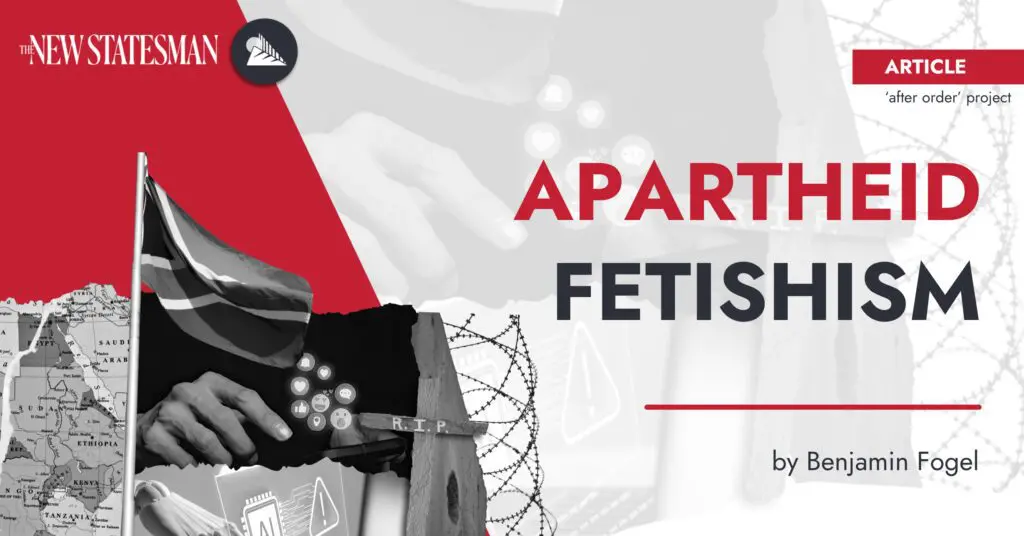
This article Apartheid fetishism was published by The New Statesman and is part of Alameda’s After Order project.
___
Led by Elon Musk, the right has developed a new lust for South African white supremacy
The first time I noticed an increase in revisionist nostalgia for southern Africa’s white supremacist states was in 2015, when a maladjusted 21-year-old man called Dylann Roof killed nine black people in a church in South Carolina. Roof had taken numerous photographs of himself wearing a jacket emblazoned with the Rhodesian, apartheid South African and Confederate flags, and had published a manifesto on a website called “The Last Rhodesian” in which he declared: “Look at South Africa, and how such a small minority held the black in apartheid for years and years… if anyone thinks that think [sic] will eventually just change for the better, consider how in South Africa they have affirmative action for the black population that makes up 80 per cent of the population. It is far from being too late for America and Europe.”
As Trump 2016 was getting into full stride and the media began reporting on what was then called “the alt-right”, it became apparent that a new generation had embraced the Rhodesian and apartheid cause. The New York Times Magazine reported in 2018, during Trump’s first term, that numerous online stores, such as “the Commissar Clothing Company, were hawking ‘Make Zimbabwe Rhodesia again’ hoodies and T-shirts”. Another maladjusted, internet-addled 22-year-old hailing from Idaho, Joseph Smith, was quoted as saying: “I’m sure you’re aware these days being a conservative heterosexual white male is rather unpopular in the eyes of many,” and “this is the demographic that caused Rhodesia to thrive as well as it did for as long as it did”. There are two YouTube videos of the song “Rhodesians Never Die”, each with 2.7 million views.
→ Subscribe to read the full piece Apartheid Fetishism published by The New Statesman.

 English (UK)
  Português do Brasil