RESEARCH PROJECT
War after revolution
Maidan and the post-Soviet crisis of hegemony
(April 2023 – present)
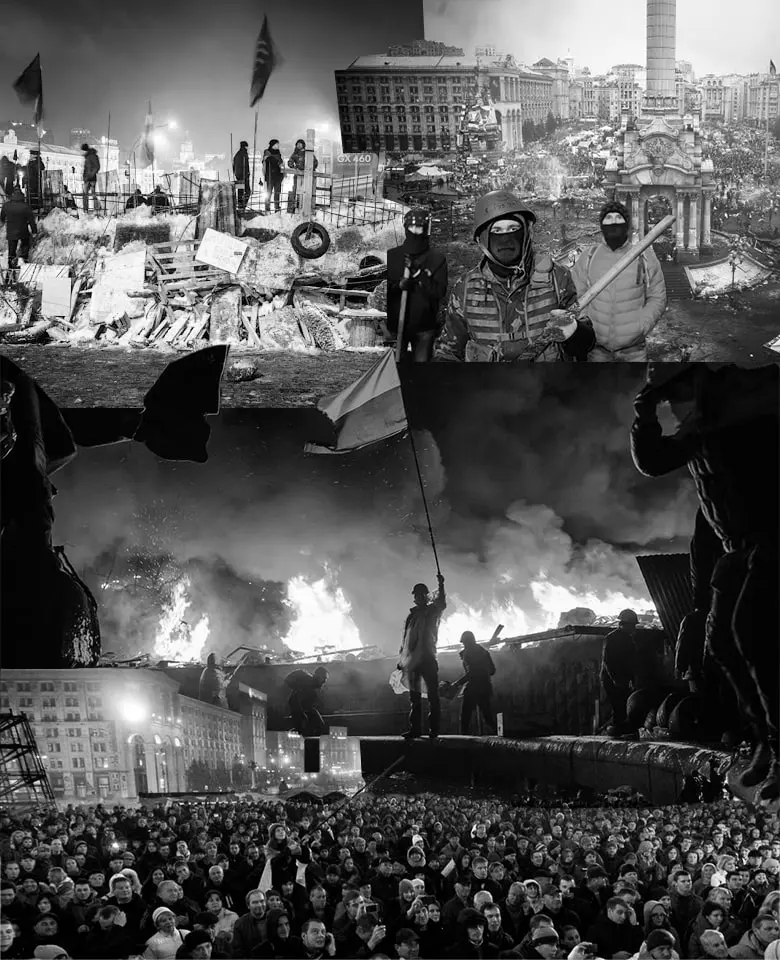
This project explores the meaning and significance of revolutions in post-Soviet republics, which have been produced by, and have contributed to, ongoing crises of hegemony. It addresses the relation of these revolutions to the war in Ukraine, following Russia’s invasion of February 2022. And it considers what the ‘Maidan revolutions’ tell us about the limitations of contemporary revolutions and about the viability of different counter-hegemonic strategies.
Traditionally, revolutions have played a pivotal role in shaping counter-hegemonic politics. However, in the first quarter of the twenty-first century, they generally failed to precipitate substantial social change or establish more inclusive governance structures.
This research explores the intricate social and political dynamics following Maidan revolutions, which came to exacerbate crises of hegemony. It identifies the various civic and political actors who were emboldened by these revolutions. And it scrutinises the class, political, and ideological imbalances within post-Soviet civil societies.
RELATED DOSSIER
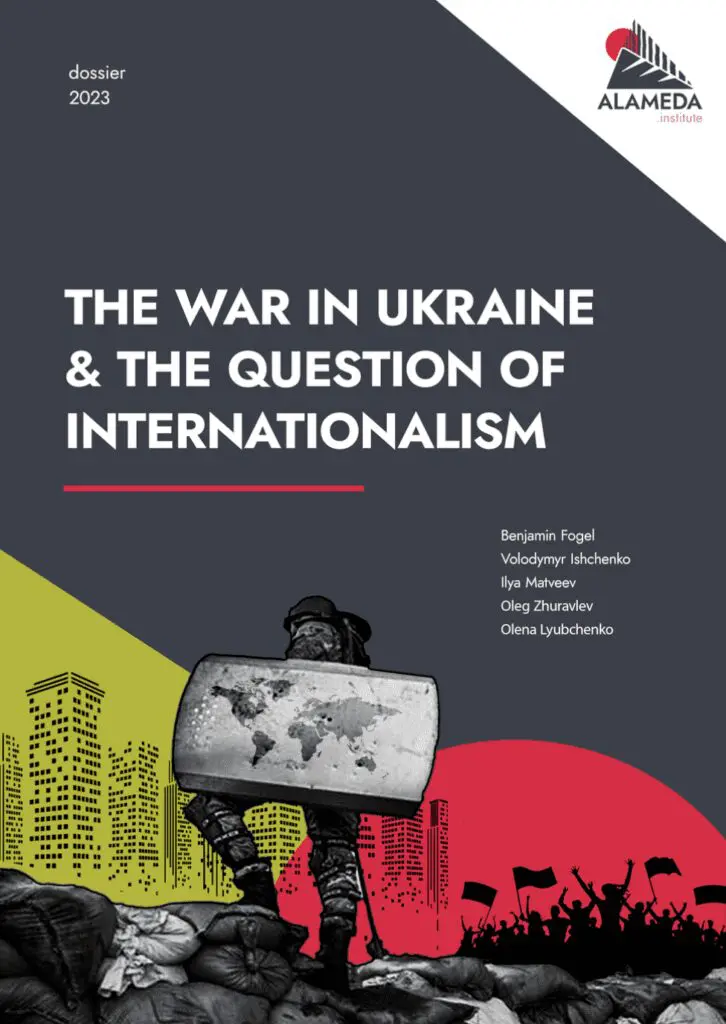
April 2023
The War in Ukraine and the Question of Internationalism
RESEARCHERS
LATEST UPDATES
book proposal
The War that Changed the World
The ongoing Russia-Ukraine war, now entering a crucial turning point, demands a deep, interdisciplinary exploration of its long-term impacts and the global trends it has intensified or set in motion. Whether or not Donald Trump’s presidency leads to a stable ceasefire, the war’s first phase appears to be nearing its conclusion. This moment invites us to reflect on the consequences not just for Ukraine and Russia but for regions far beyond Eastern Europe, with implications reverberating through the entire world system. It is no exaggeration to claim that a different World is emerging out of the tragedy of the War in Ukraine. This proposed collection of essays brings together leading international critical thinkers and scholars with expertise in politics, society, international relations, and economics in relation to Ukraine, Russia, the Western countries and the Global South. Together, they examine how this conflict has shaped and will continue to shape global dynamics for decades to come. By addressing these profound shifts, the volume offers not just an analysis of the war itself, but a roadmap for understanding the emerging new geopolitical and socio-economic orders in its wake. At its core, this book explores the enduring consequences of the war and the trends it has unleashed. These trends—whether economic, social, political, or environmental—are likely to define the future in ways that are at once unpredictable, unsettling, and, in some cases, transformative. The contributors in this volume will analyse these developments through diverse disciplinary lenses, offering insights that are as essential for activists, policymakers and academics as they are for readers seeking to understand the contours of a world fundamentally reshaped by war. By grappling with questions about the future—however uncertain or uncomfortable it may be—this book aims to foster critical dialogue on the most pressing issues of our time.
article
The Politics of Normality in Wartime Russia and Ukraine
The project’s final article uses surveys and interviews from Ukraine and Russia to track evolving war attitudes and civic changes. It introduces “soft patriotism”—a rising national pride that stops short of backing Russia’s war or intensely criticizing Ukraine’s state. This sentiment stems from a wish for “normality” after post–Soviet economic and political upheavals. In Russia, economic gains and volunteer efforts underwrite soft patriotism as a coping response to wartime trauma. Whether this can persist post‐conflict is unclear—and may explain Putin’s reluctance to pursue peace. In Ukraine, a more assertive “autonomous” patriotism also masks state‐legitimacy doubts and postwar anxieties.
article
Why is Ukraine struggling to mobilise its citizens to fight?
The second article by Volodymyr Ishchenko and Peter Korotaev uses on-the-ground fieldwork in Ukraine to show that widespread skepticism toward the state—stemming from its failure to deliver basic services—reflects a broken social contract. Rather than rallying around a shared future vision, Ukrainians are united mainly by resistance to Russian occupation. The authors call for robust support systems to relieve war fatigue and balance urgent humanitarian aid with long-term recovery, while also tackling the social and economic inequalities that hinder mobilisation.
EVENT
- 26 June 2025
- Berlin
The lead researchers will hold an event scheduled on June 26 at the Aquarium space in Berlin, with a focus on what the preliminary findings of the project can illustrate in the emerging socio-political orders following the Russia-Ukraine war. The Jacobin Germany will co-sponsor the event and help with media promotion and circulation of the recording. The project leaders will be joined on the panel by Dr. Wolfgang Streeck, Dr. Anton Jäger, and Victoria Myznikova.
READING GROUP
- 2024
- Monthly
- Network researchers
The fellows organise a regular reading group to complement the project ‘Maidan Revolutions, Civil Society, and Hegemony Crisis in Post-Soviet Countries.’ The reading group is aimed at researchers from the Alameda Institute network.
 English (UK)
  Português do Brasil