

As we seek to forge a new left internationalism, we must acknowledge what we’re up against — a global far-right network that subverts and parodies inherited liberal structures. Is a more radical democratic alternative possible?
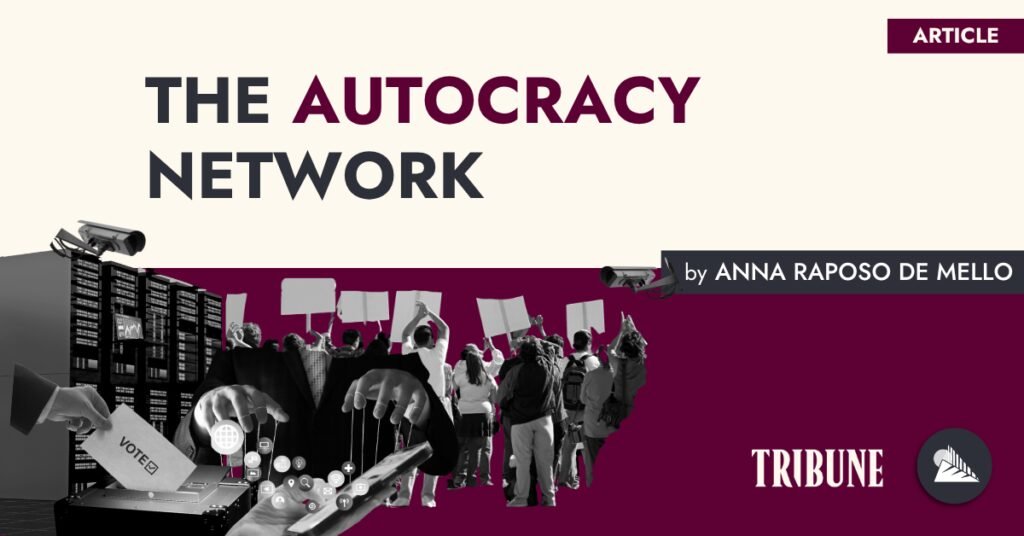
After a gunman tried to kill him in a campaign rally in July 2024, US President Donald Trump claimed to have taken ‘a bullet for democracy’. In a similar vein, when he resumed presidential office at the start of 2025, Trump announced that his election was a chance to reverse a ‘horrible betrayal’ and give back ‘democracy’ and ‘freedom’ to his people. However, within months, his administration had launched multiple attacks on the very democratic structures he was apparently defending, with executive acts overstepping congressional prerogatives, suspending citizenship rights, limiting the right to pacific protest, curtailing the independence of universities, and criminalising immigrants. Between January and May 2025, US federal courts blocked or temporarily suspended 145 executive measures deemed unconstitutional.
At around the same time, in Brazil, former president Jair Bolsonaro faced accusations for plotting a coup to overthrow — and ultimately assassinate — Luiz Inácio Lula da Silva, winner of the runoff presidential elections in 2022. Despite being prosecuted on abundant evidence gathered by the Federal Police of Brazil, and being granted the right of defence and due legal process, Bolsonaro and his allies accused the justice of the Supreme Federal Court, Alexandre de Moraes (the leading judge in the case), of being a ‘tyrant’ and a ‘dictator’. His claims were seconded by US Secretary of State Marco Rubio, who sanctioned Moraes for ‘serious human rights abuse’.
To read more of the article ‘The Autocracy Network‘, please visit the Tribune website.

 English (UK)
  Português do Brasil