This article What the US TikTok takeover is already revealing about new forms of censorship was published by The Guardian and is part of Alameda’s After Order project.
It’s not what we can or cannot say that matters – rather, it’s whether what we say can get any visibility at all under the US-specific algorithm
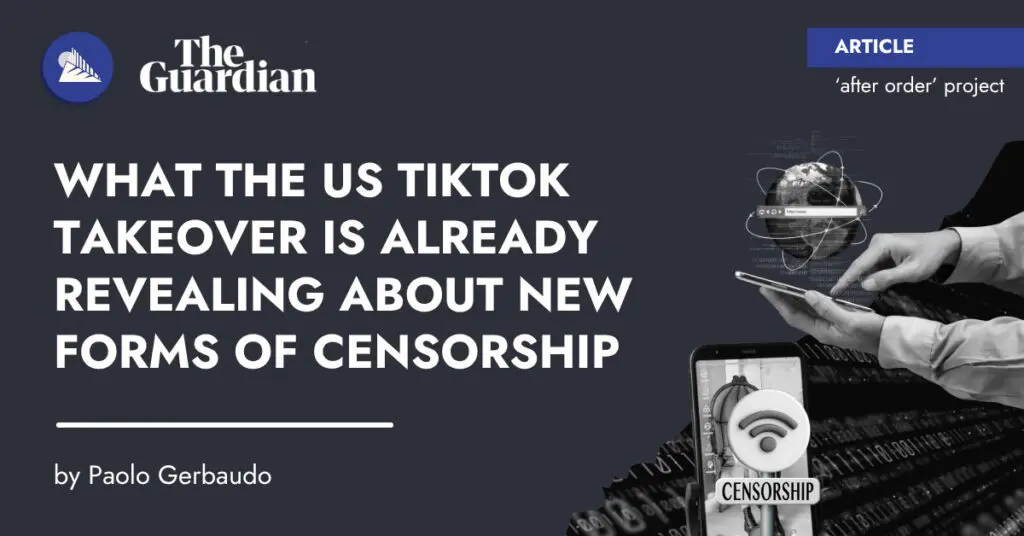
We tend to think of censorship as the direct suppression of speech. We conjure images of mouths taped shut, courts seizing books and films, and journalists or activists thrown in jail to silence their voices. But what if, in a digital era governed by invisible yet highly consequential algorithms, censorship no longer revolved around the ability to speak, but rather around the visibility of content, its effective “reach”?
The launch of TikTok’s new US-specific algorithm underscores the urgency of this risk. This week, control over the platform’s operations has shifted to the TikTok USDS joint venture led by a consortium of investors that includes US big tech firms such as cloud-computing company Oracle, with the Chinese parent company ByteDance retaining a 19.9% stake. This arrangement is presented as a means of complying with US legislation introduced under former president Joe Biden, with the aim of protecting user data and preventing political interference from China. Yet many of TikTok’s 200 million US-based users now fear that Donald Trump and his allies may use algorithmic control to do precisely what China was accused of doing: interfering with political discussion by suppressing critical voices.
To read more of the article ‘What the US TikTok takeover is already revealing about new forms of censorship’, please visit the Guardian website.
 English (UK)
  Português do Brasil