

As the state fragments, Lula’s assertions of national sovereignty have exposed the limits of his government’s power, writes Juliano Fiori.
___
This article, ‘Brazil’s sovereignty’ was published in New Internationalist.
___
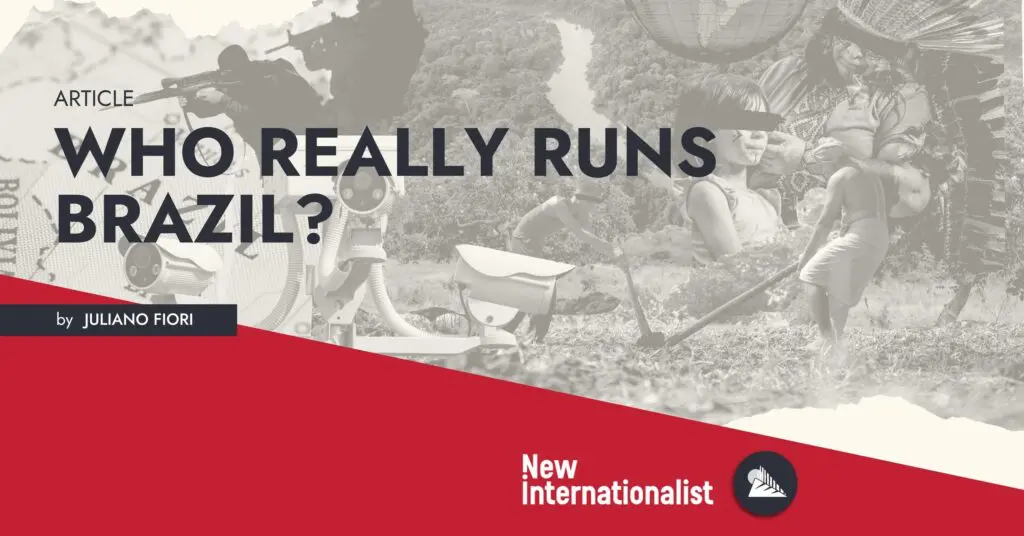
‘We cannot be scared, nervous and anxious when there is a crisis. A crisis is for us to create new things,’ said Brazil’s president Luiz Inácio Lula da Silva last August, as his government launched a new programme to ‘protect Brazilian exporters and workers’ from the impact of US tariffs.
It was a show of defiance – an approach Lula has become known for after Donald Trump’s announcement of 50 per-cent tariffs on all Brazilian imports one month before. The Sovereign Brazil Plan, among other measures, made available R$30 billion (US$5.5 billion) in credit, for small and medium-sized businesses in particular. It even won praise from the Federation of Industries of the State of São Paulo (FIESP) and the Confederation of National Industry (CNI), neither of which have been dependable supporters of Workers’ Party (PT) governments. Compared to other programmes for industry, it represented a small investment, which would fall far short of offsetting the impact of the proposed tariffs.
Nonetheless the fanfare surrounding the Plan served a political purpose. Over the coming weeks, Lula’s approval notably increased.
___
*This article is the result of After Order, a research project by Alameda that explores the contemporary transformation of sovereignty.

 English (UK)
  Português do Brasil