Social Strategy__________________________

At Alameda

Connecting research with political practice

Enabling critical and transformative dialogue between research, grassroots movements, and political organisations.

Since its founding, Alameda has sought to connect research with real social struggles—building bridges between analysis and activism so that our work is shaped by lived experience and remains practically useful. This means building and sustaining relationships with political and social actors, organising spaces of exchange, and keeping research grounded in ongoing struggles. We aim to embed this social strategy into Alameda’s culture’.

Gabriel Tupinambá, Senior Researcher

Embedding Social Strategy

We are working towards connecting research and practice by:

Building and sustaining political relationships with movements, organisations, and activists

Working across institutional and movement logics, understanding and translating between different forms of knowledge, methods and practice

Identifying ethical risks and responsibilities that arise when research intersects with social struggles

Developing research in active dialogue with movements, ensuring mutual learning and tangible value for political practice

Rethinking impact

Alameda recognises that political and social impact do not always fit neatly into traditional research evaluation metrics. Measures such as visibility, citations, deliverables, or media presence—often used by universities and advocacy organisations—rarely capture the relational and behind-the-scenes forms of influence that matter most to grassroots movements.

At the same time, many meaningful effects, such as trust-building, alliance formation, tactical coordination, and concrete political wins are difficult to quantify. Because of this, they are often overlooked in conventional evaluation frameworks.

Alameda approaches impact with this tension in mind, valuing forms of influence that may be subtle, relational, and long-term, but no less consequential.

For more on Alameda’s approach to impact, see our ‘Pathways of Change’.

Social strategy in practice

Here are some examples of how social strategy has been part of our research process:

After Order project – Research on popular sovereignty

Alameda’s After Order project provides a critical contribution to debates and strategies related to sovereignty. 

As part of this work, one of the project’s sub-streams engages with grassroots movements, particularly in Brazil, to understand and learn from their autonomous efforts to achieve food, energy, and water sovereignty.

Just Transitions project – Festival for food sovereignty

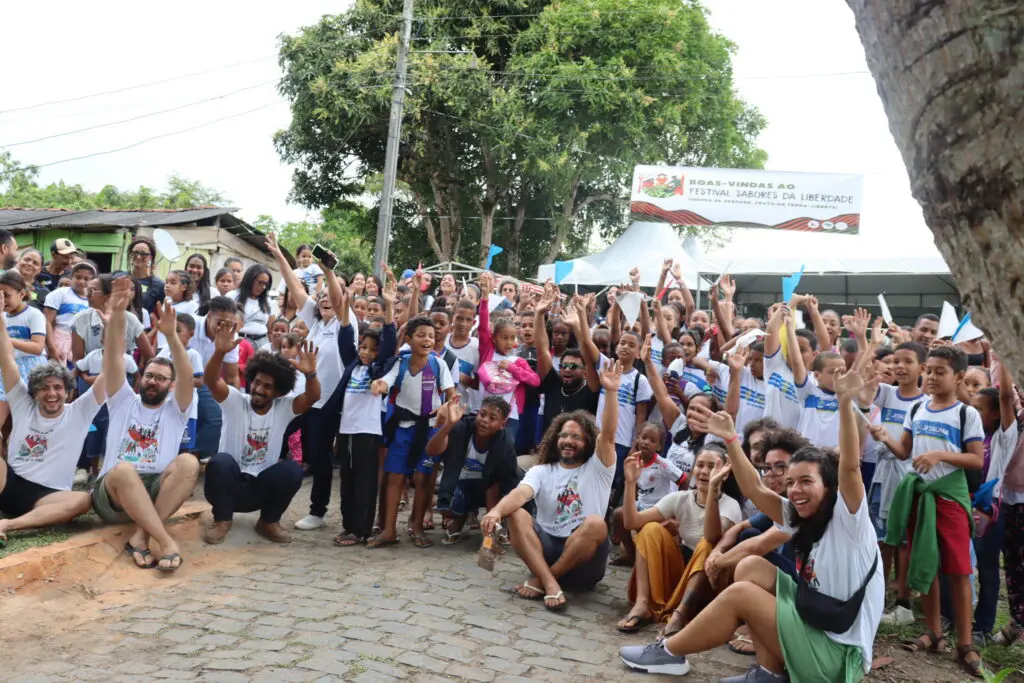
The Sabores da Liberdade Festival, held in September 2025, in the rural district of Jitaúna, in Brazil’s northeastern state of Bahia, used food as a means for encounter, exchange, and collective resistance.

Bringing together culinary creativity and popular culture, the festival affirmed food sovereignty as a lived practice of autonomy, connecting territories, safeguarding ancestral knowledge, and celebrating freedoms rooted in the land.

Enabled by the trust born of a research relationship, the festival provided a platform for discussion of ideas and strategies related to food sovereignty. It also informed Alameda’s ongoing research on this theme.

Organised in partnership with Terra de Preto and the Landless Workers’ Movement (MST), the initiative was part of Alameda’s work on Just Transitions and the Political Economy of Climate Change.

Surplus Humanity and the Challenges of De-development

Following insights from Lebanese activists on the plight of Syrian refugees, especially in the aftermath of the ‘Turkïye’-Syria earthquakes, Alameda developed a research project bringing together researchers from Lebanon, Syria, Turkey, Italy, and the UK, combining theoretical discussions and practical fieldwork, in order to examine how immigrant labour is both exploited and weaponised in contexts of extreme social instability. 

The project set up partnerships in Lebanon with the Beirut Institute for Critical Analysis and Research and the Anti-Racism Movement.