

Este artigo Custos da Guerra was published by New Left Review.
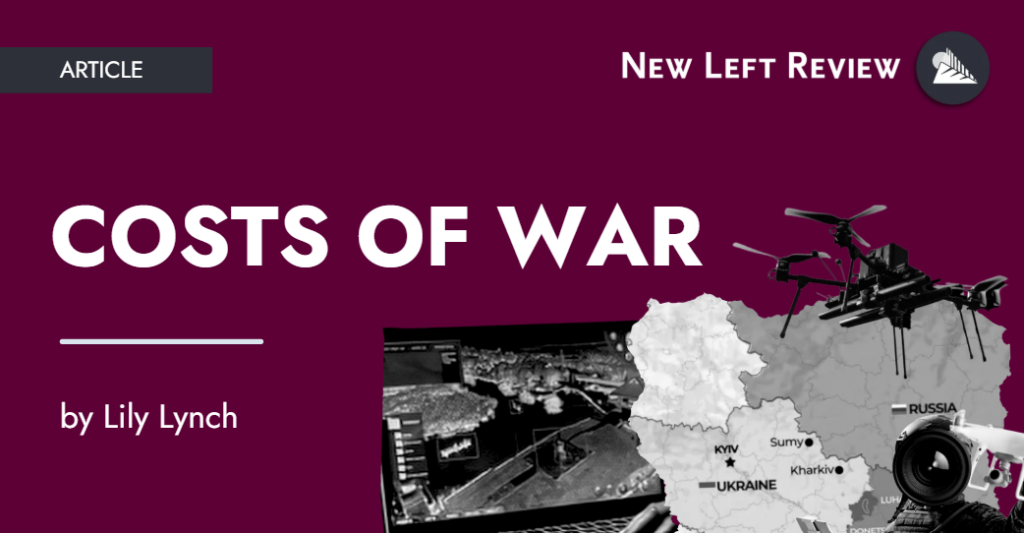
Volodymyr Zelenskyy’s speech at NATO’s Defence Industry Forum in Ankara earlier this month was a hymn to drone warfare. Drones, the Ukrainian president proclaimed, had heralded ‘revolutionary changes in the very nature of war’ – as significant as the machine gun in the First World War, or as the modern tank in the Second. ‘Disruptive’ drone tech had allowed Ukraine to increase dramatically the number of Russian casualties, intercept Russia’s Shahed UAVs and hit targets as far away as Siberia. Recent attacks had succeeded in blackening the skies over Moscow and striking oil refineries 2,700 km away in Omsk. The country had transformed itself into a ‘drone superpower’, in the words of the Atlantic Council. Before 2022, there were just seven domestic drone manufacturers – today, there are over 500. And now, as restrictions on drone exports are being lifted, Ukraine will soon be selling them to the world.
The man most responsible for putting drones at the centre of Ukraine’s war effort has been the telegenic 35-year-old, now former Defence Minister, Mykhailo Fedorov. This much-hyped tech wunderkind has acquired a following among both patriotic liberals at home and Atlanticists in the West. He has helped promote Ukraine as a kind of ‘start-up nation’ – a high-tech defence industrial powerhouse forged in war.
Assine para ler o artigo completo Custos da Guerra published by New Left Review.

 English (UK)
  Português do Brasil